In modern cabinet manufacturing, edge-banding plays a vital role in ensuring durability, aesthetics, and functionality. Two technologies dominate the field today – Laser Edge-Banding and PUR (Polyurethane Reactive) Edge-Banding. While both offer exceptional quality, they differ significantly in process, appearance, and long-term performance. Let’s explore what sets them apart and which one fits your cabinet production needs best.
Edge-Banding Technology
Edge-banding is a finishing process that seals the exposed edges of panels used in cabinetry and furniture. It prevents moisture penetration, improves durability, and gives cabinets a sleek, finished appearance. Without proper edge-banding, cabinets risk peeling, warping, and visible seams — all of which diminish both longevity and customer satisfaction.
Understanding Laser Edge-Banding
1. How Laser Edge-Banding Works
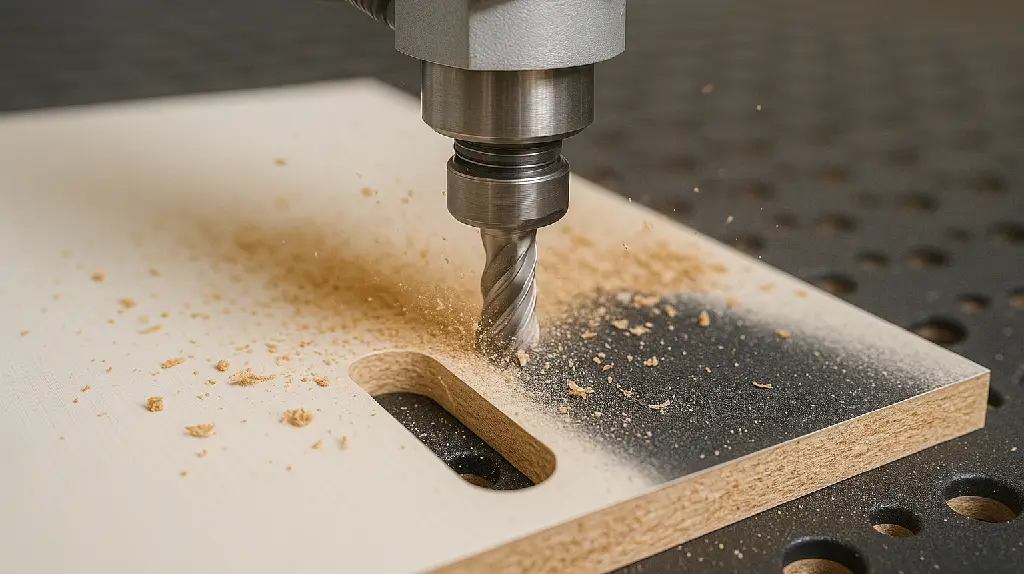
Laser edge-banding is a glue-free process that uses a laser beam to melt a functional layer on the edge band, fusing it directly to the panel edge. This creates a seamless, homogenous bond between the board and the edge.
2. Key Components and Process
- A CO₂ or diode laser heats a special functional polymer layer.
- The material melts and fuses to the board edge.
- The result is a zero-joint edge, known for superior aesthetics and hygiene.
3. Benefits of Laser Edge-Banding
- Seamless “invisible” joint with no visible glue line.
- Superior water, heat, and chemical resistance.
- Reduced maintenance — no adhesive residue or discoloration.
- Eco-friendly operation since it eliminates adhesive use.
Understanding PUR Edge-Banding
1. What Is PUR Adhesive?
PUR (Polyurethane Reactive) adhesive is a reactive hot-melt adhesive that chemically bonds to the substrate and cures when exposed to moisture in the air.
2. How PUR Edge-Banding Works?
The adhesive is heated and applied to the edge band, which is then pressed against the board. As it cures, it forms a highly durable and flexible bond.
3. Advantages of PUR Edge-Banding
- Exceptional adhesion strength and durability.
- Excellent moisture resistance — ideal for kitchen and bathroom cabinets.
- Proven technology that works with a wide range of materials.
- Lower initial equipment costs compared to laser systems.
Core Differences Between Laser and PUR Edge-Banding
| Feature |
Laser Edge-Banding |
PUR Edge-Banding |
| Bond Type |
Fusion (no adhesive) |
Reactive adhesive |
| Joint Appearance |
Zero-joint, invisible |
Thin but visible |
| Durability |
High, heat-resistant |
Extremely high, moisture-resistant |
| Maintenance |
Minimal |
Requires adhesive cleaning |
| Initial Cost |
High (laser system) |
Moderate |
| Environmental Impact |
Very low |
Moderate (adhesive use) |
Both methods produce strong and long-lasting edges, but laser technology offers a cleaner aesthetic and lower operational mess, while PUR remains the more cost-effective and flexible option for smaller operations.
Application Suitability for Cabinet Manufacturers
1. Laser Edge-Bandingis ideal for:
- Premium cabinetry with high aesthetic demands.
- Large-scale production environments.
- Automated facilities seeking zero-maintenance finishes.
2. PUR Edge-Bandingis ideal for:
- Small to mid-sized manufacturers.
- Cabinets exposed to humidity or temperature fluctuations.
- Applications requiring cost efficiency and proven durability.
Cost Considerations
While laser systems require a higher upfront investment, their reduced maintenance costs and increased production efficiency often offset the initial expense over time. PUR systems, meanwhile, are affordable to start with but incur regular adhesive and cleaning costs.
Environmental and Health Impact
Laser edge-banding is considered greener due to the absence of adhesives and VOCs (Volatile Organic Compounds). PUR adhesives, while improving over time, still emit minimal VOCs during application and require proper handling to ensure workplace safety.
Performance and Durability in Real-World Use
Both methods perform exceptionally well in moisture-prone areas, but laser edge-banding excels in maintaining a perfect seamless finish over years of use, especially in high-traffic environments such as kitchens and offices.
Future Trends in Edge-Banding Technology
The latest innovation is hybrid laser-PUR systems, allowing manufacturers to switch between both techniques depending on project needs. The industry is also moving toward energy-efficient diode lasers and recyclable edge materials to support sustainability goals.
Expert Recommendations for Cabinet Makers
If your priority is aesthetics, hygiene, and automation, invest in laser edge-banding.
If you seek flexibility, proven adhesion, and lower costs, PUR edge-banding is the smarter option.
Many manufacturers use both, depending on the client’s design and budget.
EHUA’s Edge-Banding Expertise: Precision with Versatility
At EHUA Cabinetry, we leverage the strengths of both laser and PUR edge-banding to serve a wide range of project requirements across global markets.
For large-scale, high-end apartment and builder projects, our laser edge-banding technology ensures a zero-joint finish—ideal for modern kitchen designs where visual harmony and hygiene are top priorities. The seamless, glue-free bond not only improves aesthetics but also reduces long-term maintenance, making it a preferred choice for premium spaces. Meanwhile, our PUR edge-banding remains a cornerstone of our production line. It provides exceptional water and heat resistance, crucial for humid environments like Southeast Asia and the Middle East. PUR is particularly well-suited for bathroom vanities and cost-sensitive projects, offering both performance and affordability.
By investing in both systems, EHUA empowers builders and developers to choose the best solution depending on their design goals, moisture exposure, and budget. Regardless of the method, our edge-banding is performed on high-precision German equipment, ensuring consistent quality at scale.
From sleek show flats to durable housing units, EHUA’s dual-edge banding capability is a testament to our commitment to both innovation and practicality – making us a trusted supplier for over 700+ projects and 160,000+ cabinet sets worldwide.
FAQs About Laser and PUR Edge-Banding
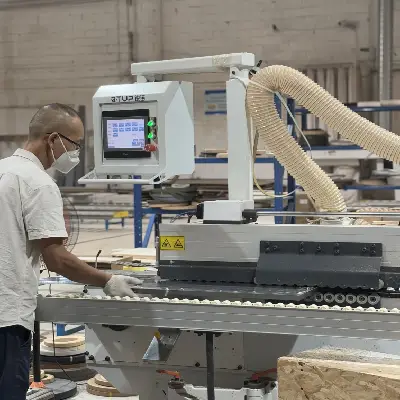 EHUA’s PUR Edge-Branding Machine
- Which method offers better moisture resistance?
PUR edge-banding generally provides stronger moisture resistance, making it ideal for bathrooms and kitchens.
- Is laser edge-banding more expensive?
Yes, initially — due to high equipment costs. However, it can reduce long-term labor and maintenance expenses.
- Can PUR adhesives discolor over time?
Slightly, especially with lighter finishes, though modern PUR adhesives are far more stable than older formulations.
- Do both techniques require skilled operators?
Laser systems are more automated, while PUR systems need careful adhesive control, so training is essential.
- Which is more sustainable?
Laser edge-banding, since it eliminates adhesive waste and VOC emissions.
- Can I switch from PUR to laser edge-banding easily?
It requires equipment upgrades, but hybrid systems can make the transition smoother.
Conclusion: Which Edge-Banding Method Is Right for You?
In the laser vs PUR edge-banding debate, both techniques stand out as industry leaders.
- Choose Laser Edge-Bandingfor premium, seamless finishes and automated production.
- Choose PUR Edge-Bandingfor cost-effective, high-strength adhesion with moisture resistance.
By understanding their differences, cabinet manufacturers can select the process that best aligns with production goals, material types, and customer expectations.