When builders and contractors buy cabinets for a project, the countertop is often the “make-or-break” component. It’s the most-used surface in every kitchen and vanity. It’s also the first thing homeowners notice. And from a project-management point of view, countertops can quickly become the source of delays, change orders, and installation headaches—especially for overseas projects where you can’t touch the material before it ships.
At EHUA, we work with high-volume residential and hospitality projects. This guide is written in a practical, contractor-friendly way to help you choose the right countertop and avoid the most common mistakes.
Countertop basics (slabs, thickness, and what actually changes the price)
Before comparing materials, it helps to align on a few basics:
Slab vs. prefab top
- Slab: a large-format board cut to your site dimensions. Best for islands, waterfall ends, and premium looks.
- Prefab top: pre-sized pieces (often with standard edges). Faster and sometimes cheaper, but less flexible.
Common thicknesses
- 12mm / 13mm: often used for porcelain/sintered stone (with proper support).
- 20mm: a popular “project standard” for many materials.
Edge profiles and add-ons
- Simple edge = faster, less risk.
- Complex edge profiles, waterfall panels, tall backsplashes, and many cutouts = more labor, more breakage risk, more lead time.
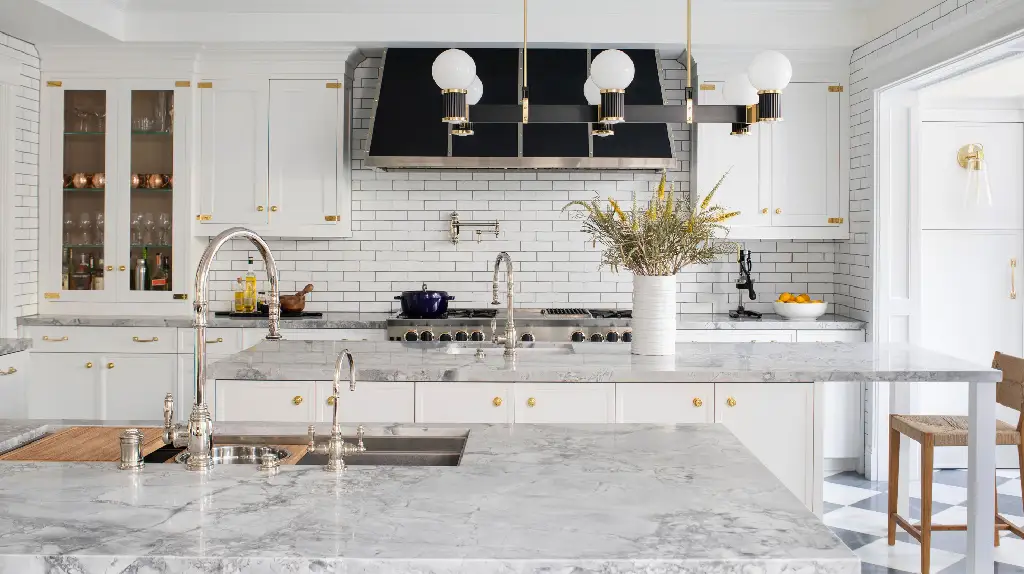
Popular countertop materials (what they are and where they fit)
There is no “best countertop for everyone.” The right choice depends on budget, usage intensity, local regulations, and the desired look.
A) Engineered quartz (where allowed)
- Best for: most residential kitchens and rental units where a consistent look and easy maintenance matter.
- Strengths: consistent color, strong stain resistance, stable production quality.
- Watch-outs: cutting and fabrication dust management is essential; and some markets have tighter regulations on crystalline silica content.
B) Low / ultra-low crystalline silica mineral surfaces (Australia-oriented option)
- Best for: projects that must meet stricter requirements for crystalline silica content.
- Strengths: created as an alternative approach to traditional quartz products; can be aligned with market expectations where “<1% crystalline silica” documentation is needed.
- Watch-outs: always confirm product documentation and local compliance needs with your importer/fabricator.
C) Sintered stone / porcelain slabs
- Best for: premium kitchens, heavy-use spaces, and clients who want a “stone-like” look with strong heat resistance.
- Strengths: excellent heat resistance, strong surface durability, good UV stability in many cases.
- Watch-outs: handling and fabrication require experience; edge chipping risk can be higher if the shop is not familiar.
D) Natural stone (granite / marble)
- Best for: high-end projects where natural variation is part of the design value.
- Strengths: unique natural patterns; granite is generally durable.
- Watch-outs: marble can stain/etch more easily; natural variation means you must approve slabs and plan seams carefully.
E) Solid surface (acrylic)
- Best for: healthcare, hospitality, and projects that want seamless joints or integrated sinks.
- Strengths: repairable, can be fabricated with near-invisible seams.
- Watch-outs: can scratch more easily than some stone-like surfaces; heat resistance depends on product grade.
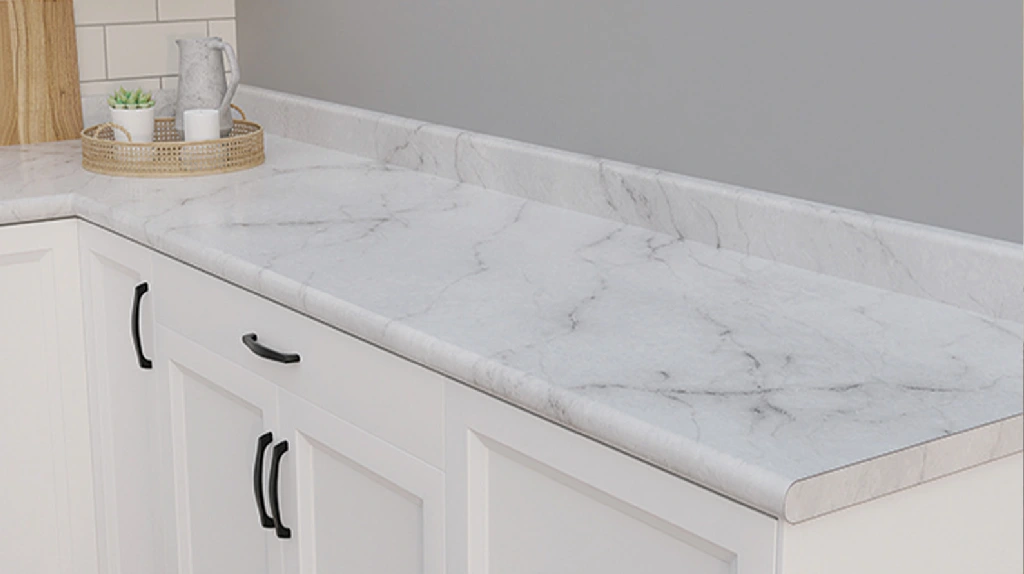
F) Laminate (HPL)
- Best for: budget-controlled apartments or large-scale rentals.
- Strengths: low cost, fast supply, many patterns available.
- Watch-outs: seam water exposure and edge durability depend on workmanship.
Performance checklist builders actually care about
When choosing countertops for cabinet projects, evaluate based on jobsite reality:
- Scratch resistance: What happens with daily cooking, tenants, and cleaning?
- Heat resistance: Can it handle hot pans or commercial kitchen habits?
- Stain/chemical resistance: Coffee, wine, oils, detergents.
- Chip risk at cutouts: Sink/cooktop openings are the highest-risk zones.
- UV stability: Important for bright spaces, sunrooms, or outdoor kitchens.
- Repairability: Can you fix local damage, or is replacement required?
- Seam visibility: Critical for long runs, big islands, and waterfall ends.
Builder tip: The same countertop material can perform very differently depending on the fabricator’s skill and installation method. Always consider the local fabrication partner as part of the “material choice”.
Compliance & safety notes (especially for export projects)
Countertops are not just about appearance. In many markets, compliance documentation matters.
For international projects, we recommend you prepare a simple documentation checklist:
- SDS (Safety Data Sheet) for the countertop product
- Material specification sheet (thickness, finish, recommended use)
- Test documentation where relevant (for example, crystalline silica test results where required)
- Packing list + labeling tied to batch/lot identification
On the jobsite, cutting and polishing should always follow local safety requirements, including dust control and PPE. This is especially important for any mineral-based surfaces.
Design coordination with cabinets (where projects commonly go wrong)
A countertop is only “good” if it matches the cabinet system and site conditions.
Sink type affects cabinet engineering
- Undermount sink: requires stronger support and good sealing; confirm rail design and sink model early.
- Topmount sink: easier and faster; often used for cost-controlled projects.
Overhangs and support planning
Large islands and breakfast bars look great – but overhang length and bracket support must be planned during cabinet design, not after fabrication.
Appliance planning should be locked early
Cooktop size, faucet hole placement, soap dispenser, water filter tap – these small decisions cause the biggest rework when confirmed late.
EHUA suggestion: Freeze appliance and sink specs before final shop drawings. It prevents 80% of countertop change orders.
Cost drivers: what increases price the fastest
If you want to control cost without sacrificing the overall look, focus on the real cost drivers:
1) Thickness
30mm costs more than 20mm not only in material, but also in handling and installation.
2) Edge build-up and premium edges
A “40mm look” can be more cost-effective than true thick slabs, depending on the design.
3) Waterfall ends
Beautiful, but increases material consumption and fabrication time significantly.
4) Cutouts and special details
Multiple sink cutouts, cooktop cutouts, and custom shapes increase risk and labor.
5) Seam planning / slab yield
The same kitchen layout can require 1 slab or 2 slabs depending on seam position and pattern matching. This is why early drawing review matters
Value-engineering tips (contractor-friendly)
- Standardize sink models across units.
- Reduce waterfall ends in typical units; reserve them for show units.
- Use 20mm with a thicker edge look where appropriate.-Confirm seam positions early to reduce slab waste.
Lead time & project workflow (how to avoid delays)
For overseas projects, the countertop schedule must match cabinet delivery and site readiness.
A reliable workflow usually looks like:
- Confirm design + appliance list
- Approve samples / color direction
- Finalize drawings
- Production + QC
- Packing + shipping
- Site receiving inspection
- Installation
Common delay reasons
- Late changes to sink/cooktop models
- Unconfirmed backsplash height or waterfall detail
- Site not ready (leveling, plumbing positions)
- Missing receiving inspection → damage found too late
At EHUA, we recommend building a “decision timeline” into your procurement plan: lock the key specs early, and keep changes to finishes and cutouts minimal after drawings are approved.
Packaging and shipping protection (overseas buyer concerns)
Countertops are heavy and fragile compared to cabinets. Packaging and labeling quality directly affects breakage risk. A practical shipping checklist includes:
- Strong crates with corner protection
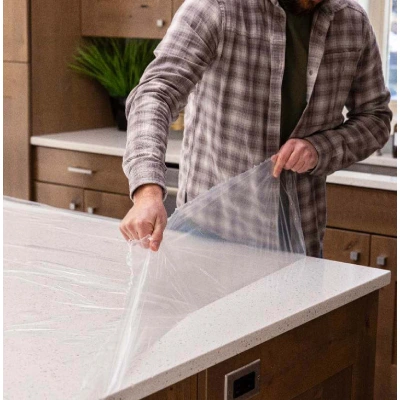
- Surface protection film and edge guards
- Clear labels: project name, unit number, piece code, orientation
- Photo records before loading
- Receiving inspection steps on-site (open, check, record, report immediately)
Tip: Many disputes happen because there is no clear “piece-to-drawing” labeling system. Proper labeling saves time for installers and reduces errors.
How to choose the right countertop for your project (simple decision checklist)
Before you place the order, confirm these items:
- Project type: apartments, villas, hotel, commercial
- Budget target: economy / mid / premium
- Usage intensity: rental vs owner-occupied vs hospitality
- Market requirements: especially for mineral surfaces and documentation
- Desired look: marble-look, concrete-look, solid colors, matte/gloss
- Maintenance expectation: easy-clean vs “natural stone character”
- Local fabricator capability: can they handle porcelain slabs or special edges?
If you align these seven points early, countertop selection becomes straightforward – and you avoid costly changes later.