When choosing materials for kitchen cabinets, wardrobes, furniture, or interior design, one of the most common questions homeowners ask is: wood veneer vs solid wood — which is better? The truth is that both materials have unique strengths, and the best choice depends on your design style, durability needs, and budget.
This guide breaks down solid wood vs wood veneer, including definitions, pros and cons, cost differences, and when each material is the smarter option. Whether you’re renovating your kitchen or planning a full home project, this comparison will help you make a confident decision.
1. Solid Wood
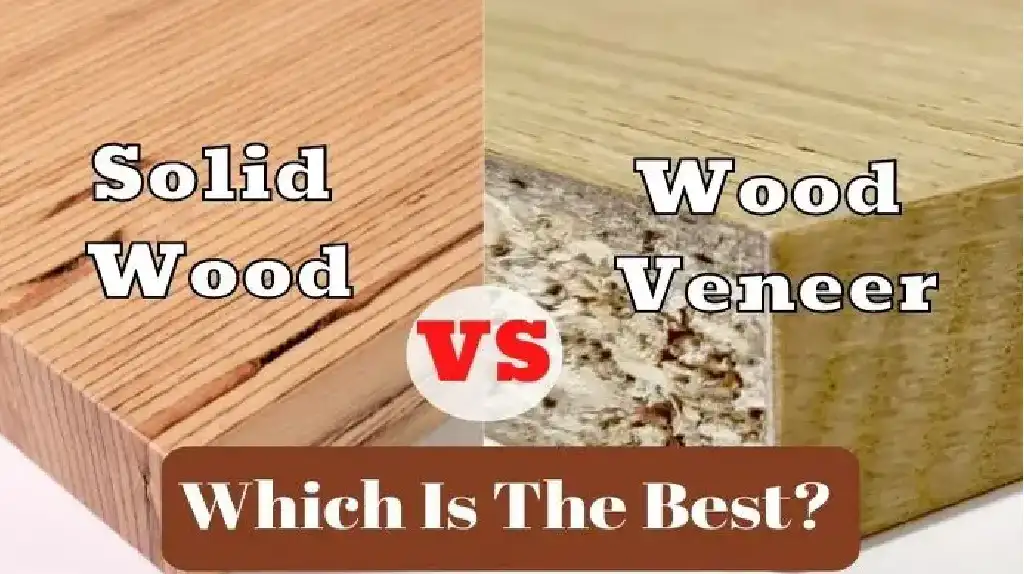
Solid wood refers to material made from natural timber. All parts of the furniture, from the inside out, are crafted from the same kind of wood (or from different solid woods joined together).
Advantages:
- Durable and Retains Value: Solid and sturdy, with a long lifespan. High-quality solid wood furniture can be passed down through generations, retaining or even increasing in value.
- Naturally Beautiful: Features natural wood grain and color. Each piece is a unique work of art.
- Eco-Friendly and Healthy: Good solid wood furniture uses less glue and paint, making it more environmentally friendly.
- Repairable: If the surface gets scratched or worn, it can be sanded, repainted, or waxed to restore its appearance.
Disadvantages:
- Expensive: High material and production costs lead to a higher price.
- Stability Issues: Wood “breathes” and is sensitive to environmental humidity and temperature. It may crack if too dry or swell and warp if too humid.
- High Maintenance: Needs to be protected from direct sunlight, kept away from heat sources, and maintained in stable humidity. Care can be troublesome.
2. Wood Veneer
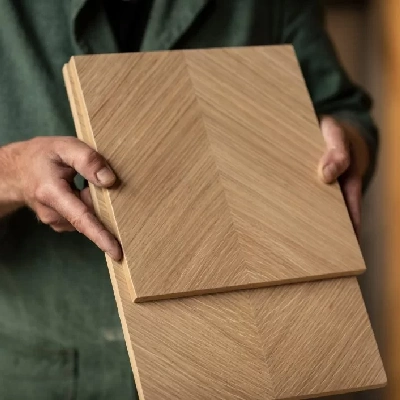
Wood veneer is not “fake wood.” Its surface is a real, high-quality wood veneer sliced or peeled from natural logs (usually valuable woods like walnut or teak). This thin layer of wood is glued and pressed tightly onto an engineered wood base (such as MDF, particleboard, or plywood).
Advantages:
- Good Value: Uses a small amount of precious wood to achieve the look and feel of premium solid wood, at a more affordable price.
- Versatile Appearance: Offers a wide variety of wood species and patterns to choose from.
- High Stability: The core is engineered wood with a uniform structure, so it is less likely to crack or deform like solid wood.
- Consistent Grain: Avoids “defects” like knots or mineral lines commonly found in solid wood, providing a more uniform visual effect.
Disadvantages:
- Not Repairable: If the thin veneer is badly scratched, chipped, or worn, the core materials inside are exposed and it is nearly impossible to repair perfectly.
- Environmental Concerns: Poor quality products may use core materials with excessive formaldehyde emissions, so be sure to check for environmental standards when purchasing.
- Shorter Lifespan: Compared to solid wood, veneer products have a shorter lifespan and are rarely passed down through generations.
- Lower Perceived Value: For consumers who value “authentic materials,” it may feel less valuable than solid wood.
3. How to Choose and Identify?
3.1 Check Grain and Joints:
- Solid Wood: The grain on the surface and sides is continuous and aligns well. The grain on both the front and back of a board should roughly match up.
- Wood Veneer: The grain often looks too perfect and repetitive. The sides and surfaces do not match, and you might see minor seams at the edges.
3.2 Feel by Touch:
- Solid Wood: Corners feel like pure wood, and the grain matches the cross-section.
- Wood Veneer: Though smooth, you may feel a slight layered separation between the veneer and the base at the edges.
3.3 Examine the Cross-Section:
- Solid Wood: The grain continues naturally from the surface to the cross-section.
- Wood Veneer: The cross-section usually reveals a core material (such as the granular look of particleboard or the uniform look of MDF) that differs in color and texture from the surface.
4. Summary and Recommendation
| Category | Solid Wood | Wood Veneer |
|---|
| Core Material | Natural wood, same material inside and out | Core is usually MDF or particle board; surface is covered with a thin layer of real wood veneer (typically 0.3–0.6 mm) |
| Structure | Made from a single piece or multiple pieces of solid wood joined together | “Three-layer structure”: wood veneer + adhesive + engineered wood core |
| Grain & Appearance | Natural, continuous, rich variations; grain on the surface and edges can match seamlessly | The grain is real because it is real wood veneer, but grain continuity is not guaranteed; surface and edge grain often cannot match |
| Durability & Lifespan | Extremely durable; scratches can be sanded and refinished; looks like new after restoration; lifespan can reach several decades | Durability depends on the thin top veneer; once scratched or worn, cannot be repaired, and the core material will show |
| Environmental Performance | High-quality solid wood furniture uses eco-friendly adhesives and finishes; generally healthier | Must pay attention to emissions from the engineered wood core (choose E1/E0-certified products) |
| Price | Expensive; natural wood itself is costly and craftsmanship is complex | Affordable; effectively uses thin real wood veneer, lowering cost |
| Stability | Sensitive to humidity changes; may expand and contract, improper treatment may cause cracking or warping | Very stable; core is engineered board, not prone to cracking or deformation |
| Touch & Feel | Warm, natural solid-wood texture and feel | Surface is real wood veneer, texture is similar to solid wood, but psychological feel is different |
If you value quality, durability, heirloom potential, and have a sufficient budget, choose solid wood—a long-term investment.
If you love design, want a high cost-performance ratio, have a limited budget, but still like the look of wood grain, wood veneer is an excellent choice. As long as you choose reputable brands that meet environmental standards, the quality and aesthetics are more than sufficient for daily use.