Wood prices are touching the sky. Under such conditions, it feels impossible sometimes to get the interiors or furnishing done. However, particle board is a versatile, budget-friendly, and sustainable alternative to wood. You can use it in various interior designs and furniture projects including cabinet making. If you use particle board thoughtfully, you can create stunning cabinet designs.
The uniform composition of the material allows precise edge banding and cutting. Its modular design provides adaptability. With this material, you can enjoy creative freedom while making a cabinet because you can choose from various paint and finish options. This article uncovers some of the essential tips and tricks for working with particle boards for making cabinets.
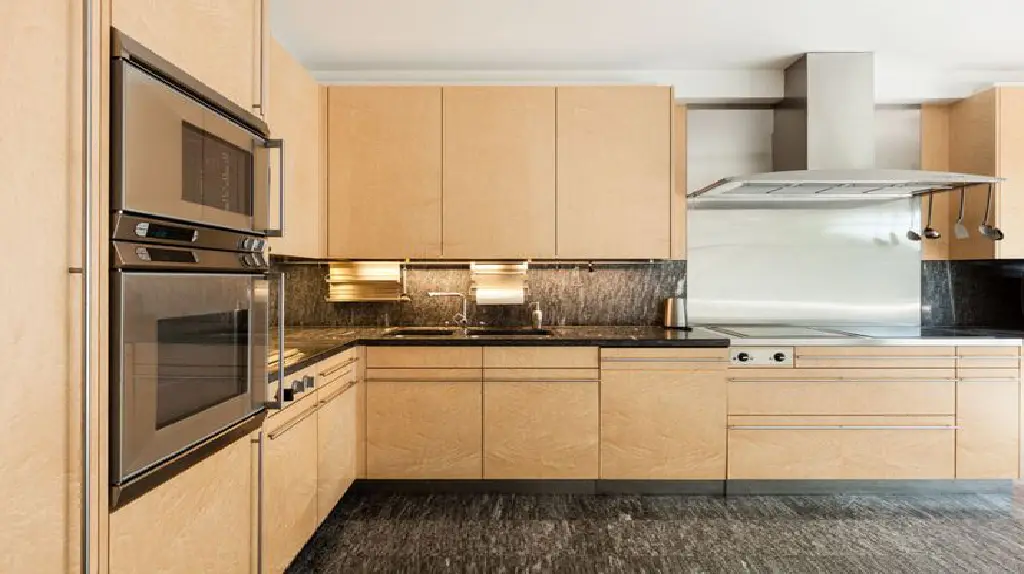
Essential Tips & Tricks for Working with Particle Board
When you are using particle board in cabinet making, you should take care of the following things to get impressive results:
Choosing the Right Grade:
Particle boards have different grades depending upon the ease of use for various applications. Here are two primary particle board grades:
- Construction Grade: It is suitable for construction projects. It has a rougher surface. You can use it for sheathing, subfloor, and other construction purposes.
- Furniture Grade: As the name suggests, it is great for making cabinets and other furniture projects. It’s the highest quality particle board and has a smoother surface. It is less prone to flaking or chipping.
For making cabinets, opt for furniture-grade particle board as it will give you stunning results with better durability and a smoother finish.
Use High-Quality Hardware:
Generally, the strength of particle board is low as compared to wood. That’s why, for assembly, you should use good quality hardware such as hinges, screws, and drawer slides. We recommend not to use nails as they lose with time. Buy particle board screws or chipboard screws for this purpose.
Design for Stability:
Particle boards are more likely to warp and get damaged in moisture due to their composition. To decrease these risks, follow these guidelines:
- Your particle board cabinets should not come in contact with water.
- You should design your cabinets with additional support like reinforcing corners or cross bracing on the shelves.
- Add cabinet legs to your cabinet designs to elevate it from the floor. It’ll prevent the cabinet from coming in contact with water.
Consider Doing Edge Banding
One disliked thing about particle board is its exposed edges. They appear very unattractive. You can apply edge banding to overcome this issue. Edge banding is a narrow layer of material. It can be either metal, wood, or PVC. It is applied on the particle board edges to give a clean finished look.
- Metal Edge Banding: The touch of this material on the edges provides a modern and aesthetically pleasing look. Metal is durable and gives a unique touch to the cabinetry.
- Wood Edge Banding: If you are looking for a natural look, wood edge banding is an ideal choice. You can paint or stain it to match the cabinet color.
- PVC Edge Banding: It is a budget-friendly and common option that comes in various colors. You can use a household iron to apply it to the particle board edges.
Apply a Quality Finish:
Before you paint your particle board cabinet, you must apply good quality primer coating. Not only will it give a smooth finish but also prevents paint from being soaked as the primer seals the surface. After you apply the primer, use a fine grit sandpaper and sand the surface lightly. It’ll prepare the cabinet surface for stain or paint by smoothing out roughness.
Use a sprayer or a paintbrush to evenly apply a layer of stain or paint. You should prefer applying several light coats to a single heavy one. It’ll prevent drips and ensure smooth and even coverage. To further enhance the protection and durability of particle board cabinets, apply a clear finish. It’ll also provide the piece with a professional sheen look.
Precision Cutting for Clean Edges:
When you are cutting the particle board for cabinet making, the particle board is more at risk of splintering and chipping. To ensure precise cut and clean edges, do this:
- Use a Precision Tool: To cut the particle board, choose a saw whose blade has a high tooth count. It’ll give cleaner cuts and minimize the risk of chipping.
- Clamp and Secure: Make sure the particle board is secure in its place while cutting. Use a workbench or clamps to prevent shifting while cutting. Doing this will give you more accurate results while making particleboard cabinet doors and shelves.
Create a Visually Appealing Cabinet Design:
Finally, do not hide your creative instincts while designing and making cabinets from particle board. If you put a little thought and a few tricks into it, you can transform a plain and uninspiring cabinet into an amazing design. Here are a few tricks:
- Decoupage Magic: It’s a perfect way to give a personalized and unique touch to your particleboard cabinet. You can use any fabric, decorative paper, or even old maps.
- Painting Techniques: You can utilize various painting techniques such as stenciling, geometric patterns, or ombre to create a visual interest in your cabinet. Also, choose the best paint for particle board cabinets like oil-based enamel paint.
- Mixed Materials: Combine other materials like glass, leather, or metal to combine particle board. It’ll give an eclectic and modern look.
How EHUA’s Particle Board Cabinetry Helps Builders Deliver Apartment Projects on Time and on Budget
As large-scale residential construction accelerates across global markets, builders and developers face increasing pressure to deliver beautiful, durable, and cost-effective interiors—without compromising on speed or compliance. In this landscape, EHUA Cabinetry has emerged as a trusted B2B partner, with 16 years of experience providing kitchen and bathroom cabinetry for over 700 real estate and multifamily housing projects.
One of EHUA’s key strengths lies in its mastery of melamine-faced particle board cabinetry—a material that has proven to be the perfect balance of cost, quality, and design flexibility for large-scale apartment developments. Here’s how our engineered approach to particle board gives your project a real-world edge.
Why Particle Board Is Ideal for Apartment Cabinetry
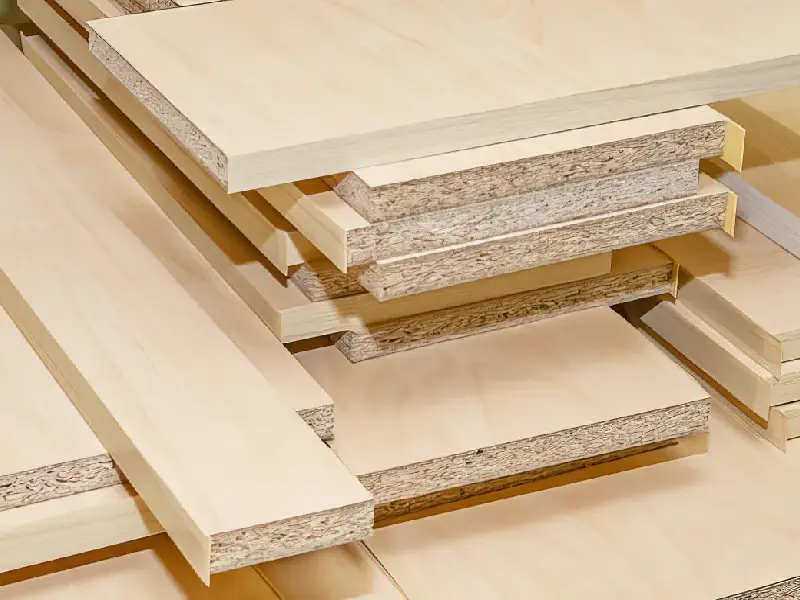
Particle board has long been a go-to material for cabinetry in commercial and residential projects, especially where volume, consistency, and affordability are key. Unlike solid wood or plywood, particle board is:
-
Cost-effective: Allows developers to scale cabinetry solutions without inflating project budgets.
-
Stable and uniform: Offers consistent thickness, density, and flatness—ideal for precision production.
-
Versatile in finish: Easily laminated with melamine or PVC in a wide variety of textures and colors.
At EHUA, over 80% of our export cabinetry orders for apartments and multi-unit dwellings use particle board, making us experts in optimizing its use for builder-specific needs.
PUR Edge-Banding: Elevating Performance and Moisture Resistance
While particle board offers many benefits, one common concern is its moisture resistance. To address this, EHUA applies advanced PUR (polyurethane reactive) hot-melt edge-banding technology—a premium sealing method rarely used by ordinary cabinet manufacturers.
Benefits of our PUR edge-banding include:
-
Waterproof sealing of panel edges to prevent swelling or damage from humidity.
-
Seamless appearance with ultra-thin glue lines for a cleaner, more modern look.
-
Enhanced durability, particularly in kitchen and bathroom environments.
Whether your apartment project is in a coastal city, humid region, or high-traffic rental property, EHUA’s PUR-sealed particle board cabinetry ensures long-term resilience without the premium price tag of plywood or hardwood.
A Proven Track Record Across Global Projects
Over the past 16 years, EHUA has supported 160,000+ cabinet sets for real estate developments across the UAE, Southeast Asia, Australia, Israel, and the U.S. We work with contractors, procurement teams, and developers to deliver products that meet:
-
Fire and moisture resistance requirements
-
Local environmental certifications (E0/E1 formaldehyde standards)
-
Style and finish preferences of target buyers or renters
Whether it’s a mid-rise residential building in Tel Aviv, a luxury apartment block in Kuala Lumpur, or a mixed-use tower in Dubai, EHUA’s particle board cabinetry offers the best cost-to-value ratio without sacrificing aesthetics or quality.
Particle Board Done Right—By Experts Who Know Projects
Particle board cabinetry, when engineered correctly, is not a compromise—it’s a strategic solution. At EHUA, we have honed every aspect of material sourcing, PUR edge-banding, panel design, and project coordination to help our clients stay within budget, reduce lead times, and meet demanding construction timelines.
We’re not just a cabinet factory. We’re your partner in project success.
If you’re a builder or developer planning your next apartment or multifamily housing project, get in touch with EHUA today. Let’s explore how our optimized particle board cabinetry can deliver both performance and savings—at scale.